


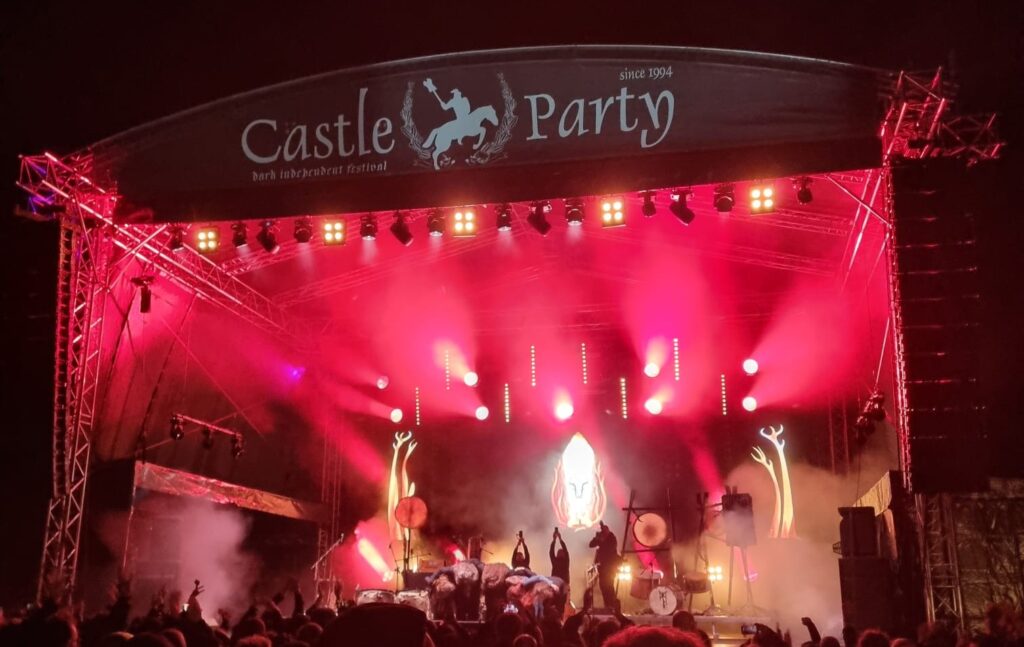
I’ve been going to Castle Party since 2008, with one break when the festival happened to clash with my wedding, and of course the pandemic gap that affected everyone. Apart from that, we’ve basically always been there, so naturally I’m looking at this edition in the broader context of previous years as well. From that perspective, this year’s Castle Party seems to me like a fairly successful edition. If I count the concerts that were interesting, engaging, moving, or simply pleasantly surprising, there were quite a lot of them.
Full review in Polish (including English subtitles – enable youtube cc) on youtube, link below:
Thursday
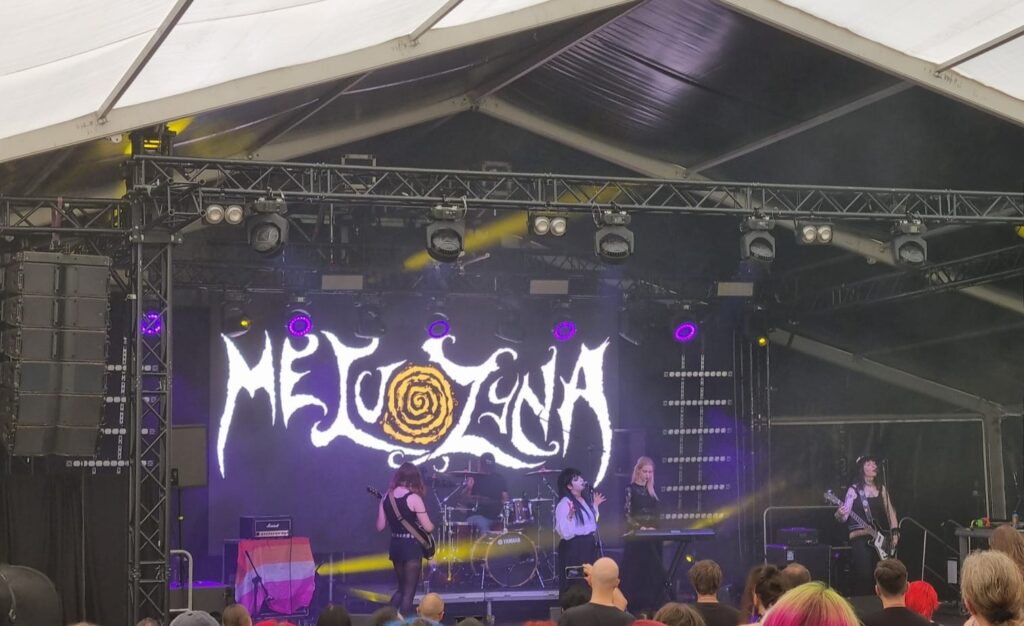
Thursday has long since become a full festival day at Castle Party. The park stage, although it has a different atmosphere than the castle stage, is now effectively a proper festival stage, so I don’t treat the concerts there as second-tier. This year, unusually, I managed to get there for the very first show. The festival opened with Meluzyna, and it was a very good opener. The music was more punk than gothic or gothic-punk, less vampiric and more direct, but I enjoyed it a lot. The lineup seemed young, but in no way inexperienced, at least in terms of performance. It was political, energetic, and there was clear chemistry within the band. In terms of execution, this concert was better than many later performances at this edition.
After that strong start came Poznań’s After the Sin, which cooled the atmosphere down quite a lot. For me, the concert was at times too cold, too monotonous, maybe even a little sleepy. I joked that it was actually a fitting name, because the sin is already over — or maybe they should add a bit of fire so that it happens during the sin, or at least just before it. One plus was the additional female vocal, which definitely added variety — I’d like to hear more of that live. It wasn’t a bad concert, but after Meluzyna I missed the energy here. Then came Mayflower Madame, with a full rock lineup and a more professional sound than Meluzyna’s opening set. At first I was a bit bored, but over time there were trance-like moments that got me tapping my foot. It may not have been immediately gripping, but it had its strong parts and held up perfectly well live.
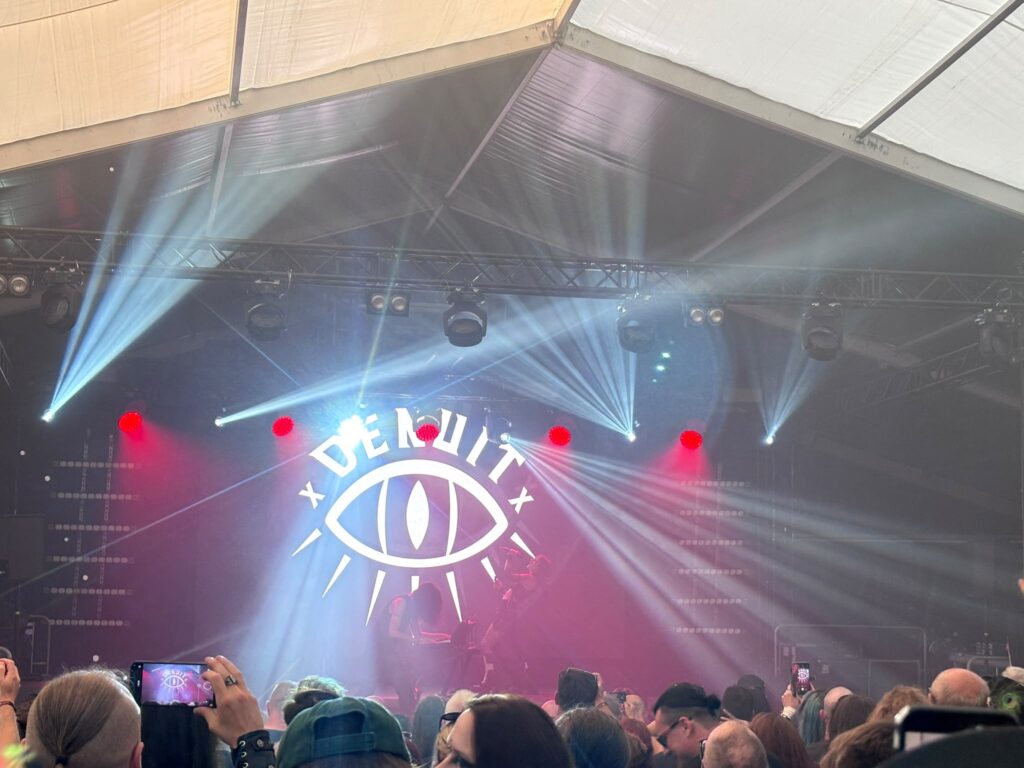
Denuit turned out to be the best concert of the evening for me. It was an electronic-vocal duo, at times balancing somewhere between synth-pop and something more club-oriented. Because of the quasi-operatic vocals, the whole performance occasionally came dangerously close to the edge of kitsch, but fortunately Denuit never crossed that line. The material was catchy, interesting, and despite the sparse setup they managed to create a genuinely good concert. With very limited instrumentation, the duo still managed to put on a show and engage the audience.
The headliner of Thursday night was Merciful Nuns. Paradoxically, this was probably the weakest concert of the day for me. I really like this band, I have their albums and a T-shirt, but this time the newer, more epic material simply didn’t work as well live as it should have. In the simpler songs, that unfortunate Dr. Avalanche still held up, but in the more elaborate arrangements and the more epic, Nephilim-like rather than Sisters-like numbers, the lack of a live drummer was very noticeable to me. The problem with Artaud Seth is also that he keeps closing one project after another, reaching some magic number, usually seven or ten, shutting things down, and then after a few years returning with another incarnation — in Merciful Nuns’ case, that’s the tetralogy about the planet Kvltan. The old material from the first ten (yes, ten!) albums had a certain simplicity that worked well, while the newer, more expanded material wrapped in layers of keyboard arrangements — which were also coming from tape — sometimes felt flattened out. There were a few very good moments, especially in the older songs, but overall it wore me out, and in the end it was a major disappointment. Even so, I’d still rate Thursday very positively.
Friday
Friday was very much a future-pop day, and fifteen years ago plenty of Castle Party regulars probably would have killed for a lineup packed with names like this. I only got to the castle for Rotersand. I wasn’t expecting much and basically got exactly what I expected: something halfway between a concert and a DJ set built around playing the material with vocals. It was nice to revisit those songs, especially the biggest hits, but I could just as well have listened to them on the album. The thing I remember most from the concert was probably the singer’s joke: “we are from Germany, but we come in peace.” I’m not sure that says very much in favor of the show.
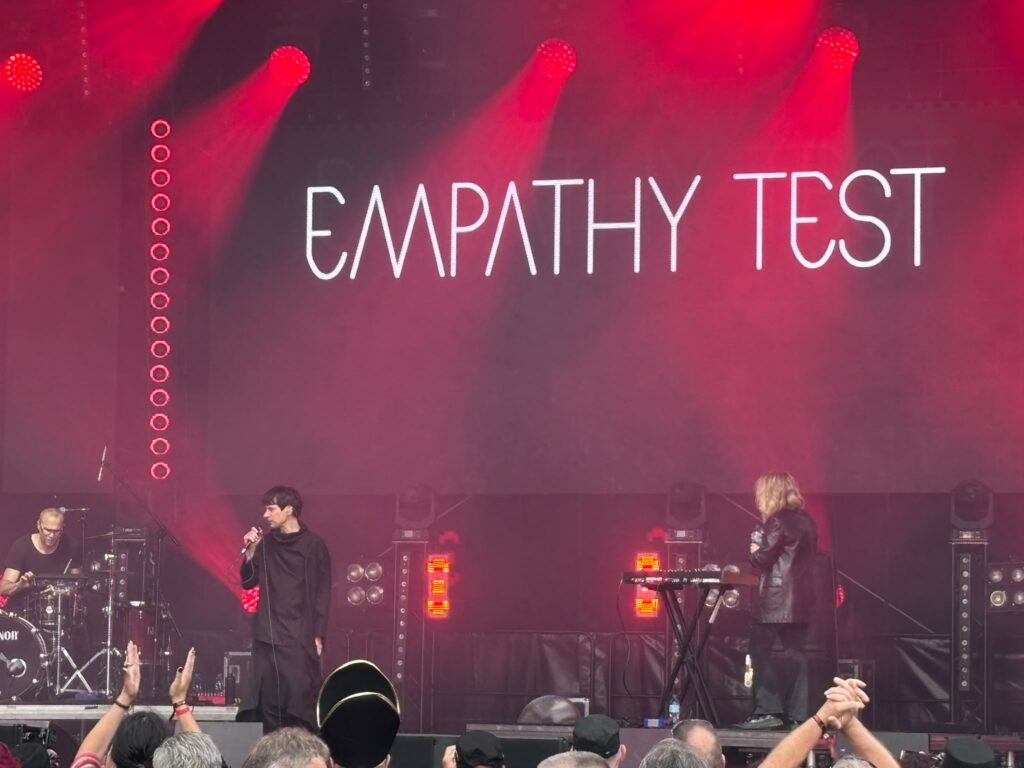
Empathy Test disappointed me so much that I ended up appreciating Rotersand more by comparison. I had seen the band before in a club setting, at the Dark Electro festival in Progresja (Warsaw), and it sounded better there. Here there was live drums and keyboards, but they still failed to create the atmosphere that this material needs. Some people enjoyed the concert; unfortunately, it didn’t convince me. Next band wich performed that evening was Hocico. I used to really like them, especially in the context of aggrotech and dark electro scene. This time there were a few older tracks — “Poltergeist!” — and those moments worked best. It wasn’t a bad show, more solid, at times even very enjoyable, but it clearly lost steam toward the end. Why the Ministry cover with a guitar track from playback? There were few numbers that worked well, but without much of a surprise factor.
Diary of Dreams was unfortunately a much bigger disappointment. Adrian Hates had obvious vocal problems, especially at the start of the concert, and it was very unpleasant to listen to. Only the second half of the show started to sound better, and they also played older songs like “Chemicals” and “But the wind was stronger.” I didn’t have a bad time, because the old material still did its job, but the first impression was so poor that it really damaged my overall perception. It hurts even more because I consider Diary of Dreams one of the most outstanding bands in this broad gothic sphere, so you naturally start wondering: am I hearing this wrong, or did something really go wrong here?
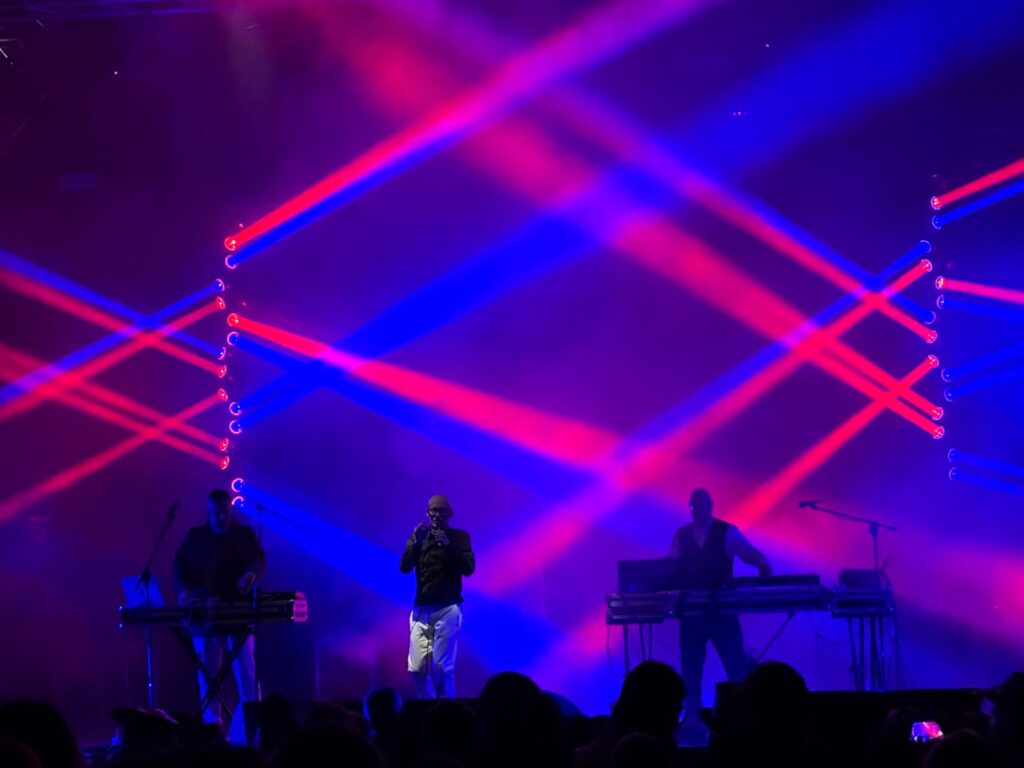
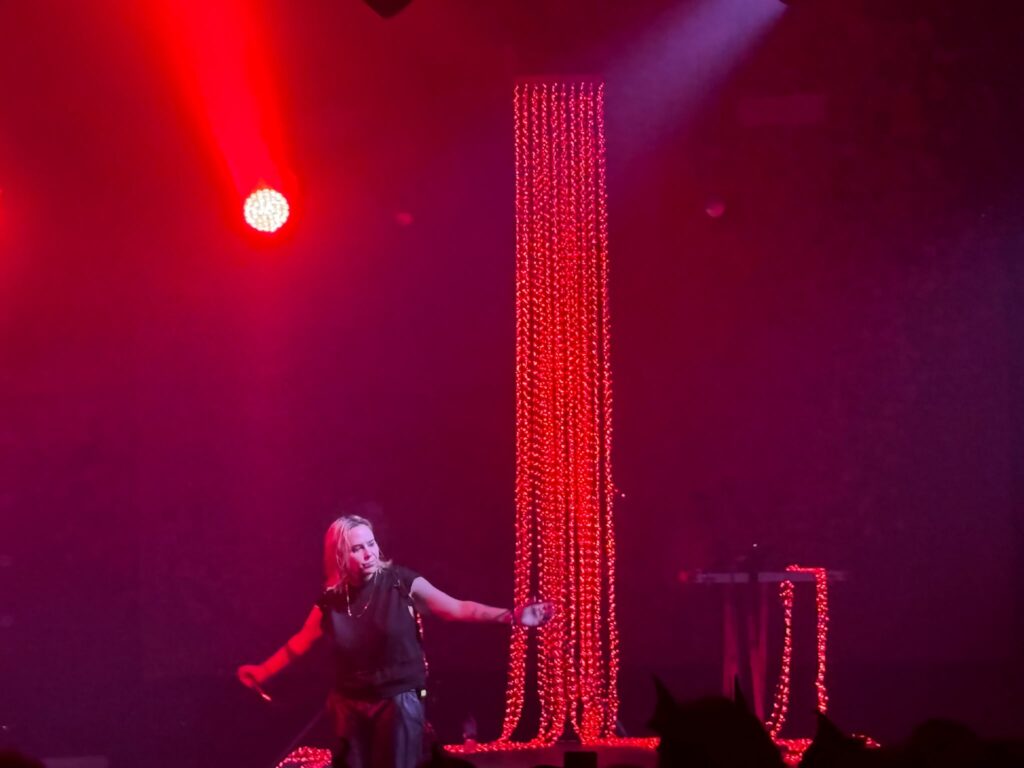
After Diary of Dreams came Covenant, replacing VNV Nation, and it was one of the best concerts of the entire festival. I got a very strong best-of set, but without the feeling that the band was just going through the motions. Eskil was absolutely excellent, the rest of the lineup did their part, and the concert simply carried the audience along on waves of music. There was also that element of slight chaos, when something was plinking away not always exactly where it should have been — I’m glancing here at Daniel Jonasson — but rather than getting in the way, it added a human touch to the show. It was a very successful performance, one of those reasons why you go to a festival like this in the first place. After Covenant came something new and very surprising: Sierra Veins. This was one of the most astonishing concerts of the entire edition. One person on stage, and yet the show was worked out to the minute: movement, lighting, dynamics, dramatic arc. Musically it sat somewhere between industrial, techno, and whispered — or at times almost rapped — vocals. I didn’t think anything at Castle Party would still manage to surprise me like that, especially me, someone who tends to be rather skeptical about beats-from-a-box, playback-driven performances.
Saturday
We deliberately spent Saturday mostly by the park stage, because that day there was strongly industrial and it simply interested me a lot. I treated The Allegorist as a bit of a curiosity, but a successful one. It was music that wasn’t very concert-like in the classic sense, more ambient and electronics-based, but it had structure and drama, so as a musical narrative it worked very well. It was more the kind of concert you sit through on the grass, looking at the tent roof, or if the organizers had made a bit more effort and rolled up the side flaps, maybe even looking at the clouds.
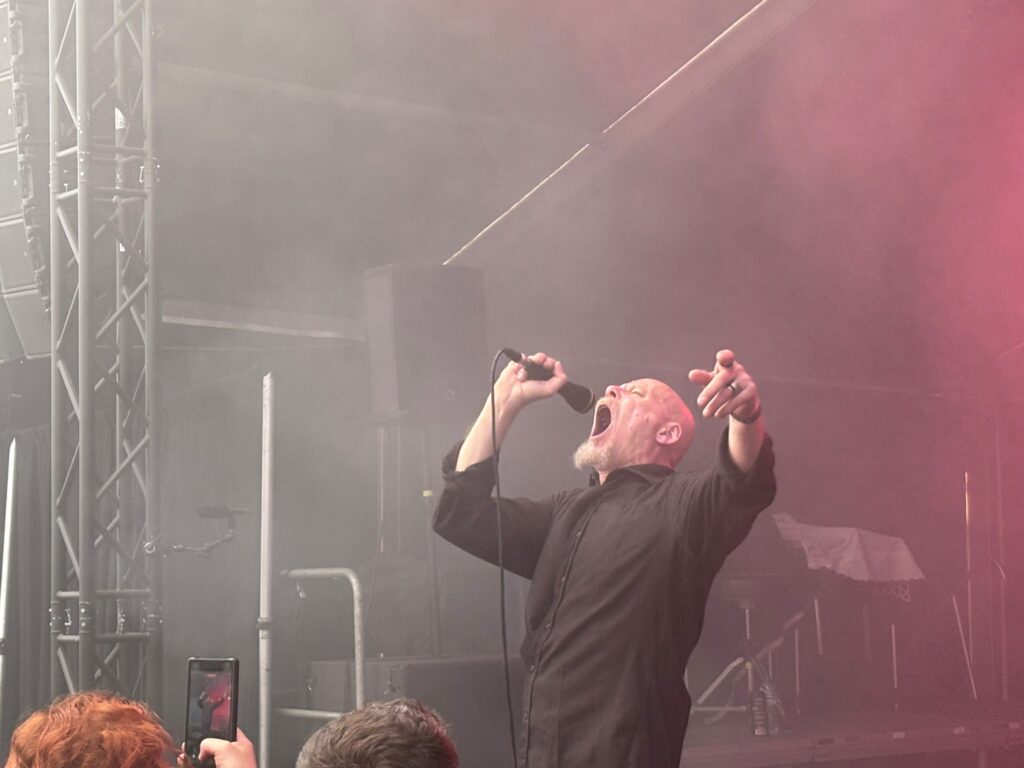
After In Slaughter Natives, I think I had expected a little more. A lot of things worked live, and the atmosphere was exactly as it should have been, but with those marching rhythms I simply missed a live drum, a plain snare, or some kind of tom that would have given it even more force. It wasn’t a bad performance, but it didn’t sweep me away the way it could have. I didn’t watch Xotox, so there’s no point in forcing that into the story, although later I did of course hear that they played “Popcorn” as an encore — to each their own. This Morn’ Omina, on the other hand, was a very positive surprise. The band came with a rather large five-piece lineup and managed to pull the audience into a tribal trance thanks to live drums and the vocalist. With music like this I always wonder how much is truly live and how much is supported by backing tracks. I didn’t see Hybryds, so I’m simply leaving that out as well.
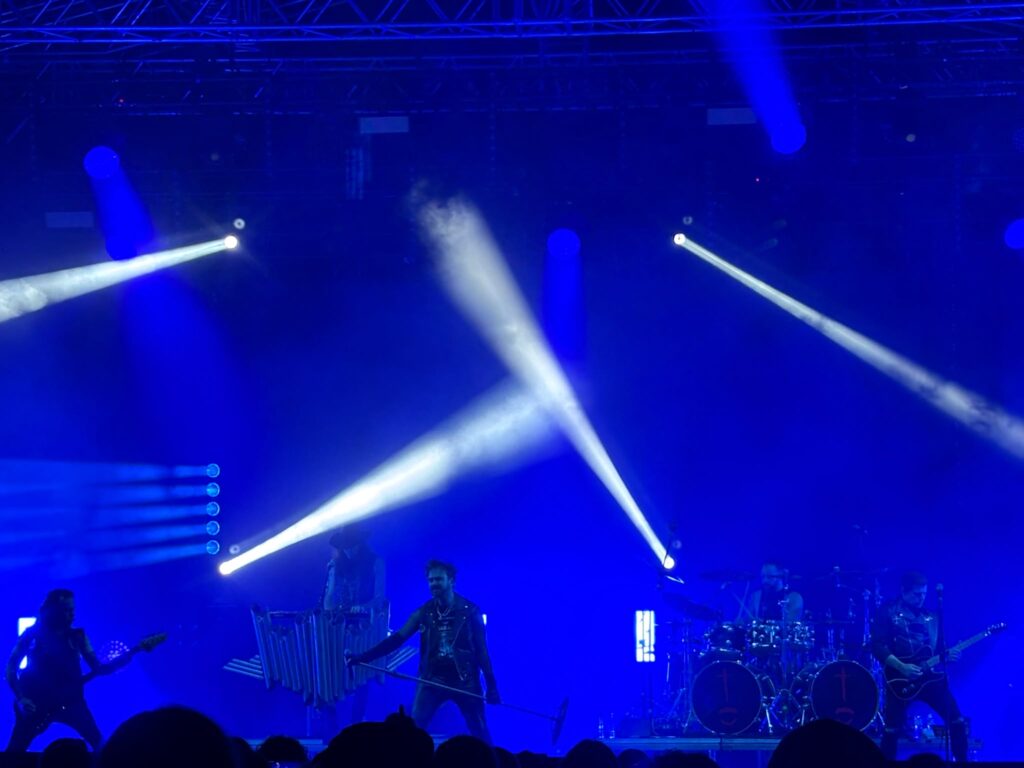
At the end of the day we moved over to the castle for Moonspell, and that was a very good decision. These are seasoned live performers, but I never had the feeling they were just phoning it in. It also mattered that the band still has something to say — the excellent new album Far from God — and isn’t just cashing in on old hits. What made me happiest was hearing a lot of material from Irreligious, my favorite Moonspell album. There was something amusing in the contrast: Fields of the Nephilim didn’t play, Merciful Nuns didn’t deliver, and meanwhile the metal guys from Portugal came and played a very solid, at times almost textbook gothic concert. A very successful set, and it could even have been longer.
Sunday
Sunday seemed like the least interesting day of the festival to me, but in the end it still brought several very strong points. I always have the impression that on Sunday everyone is a bit less present, and the most interesting things happen earlier, on Thursday or Friday. I went fairly early to the Gdańsk-Białystok band Agonised Too, and it was a very good way to start the day. The latest album Eye Cry is genuinely strong, and the mix of songs from that record plus the highlights from the debut LP really worked.
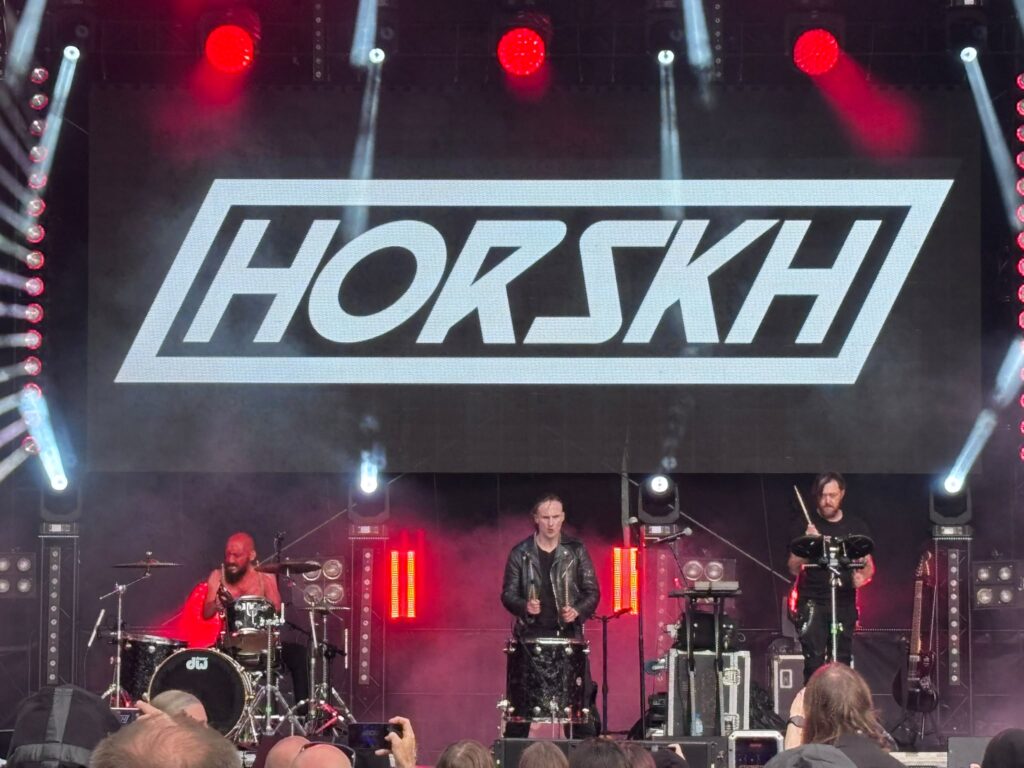
I wondered whether to go to Ira Noctis on the park stage, but since I had seen that project in January at Liverpool in Wrocław — a great gig — I chose Horskh instead, and that was a very good call. It was one of the best concerts of the festival. Three people on stage, but they played like six, with loads of energy and a very successful combination of electronics, industrial, and guitars. Everything made sense here, nothing felt tacked on just to make the lineup seem complete. In a lot of bands like this, the guitarist is basically there so that the live show has a reason to exist, but here everything fit together perfectly. The concert actually sounded better than the albums, which is important because the next one comes out in autumn, and I’ll definitely be looking out for it.
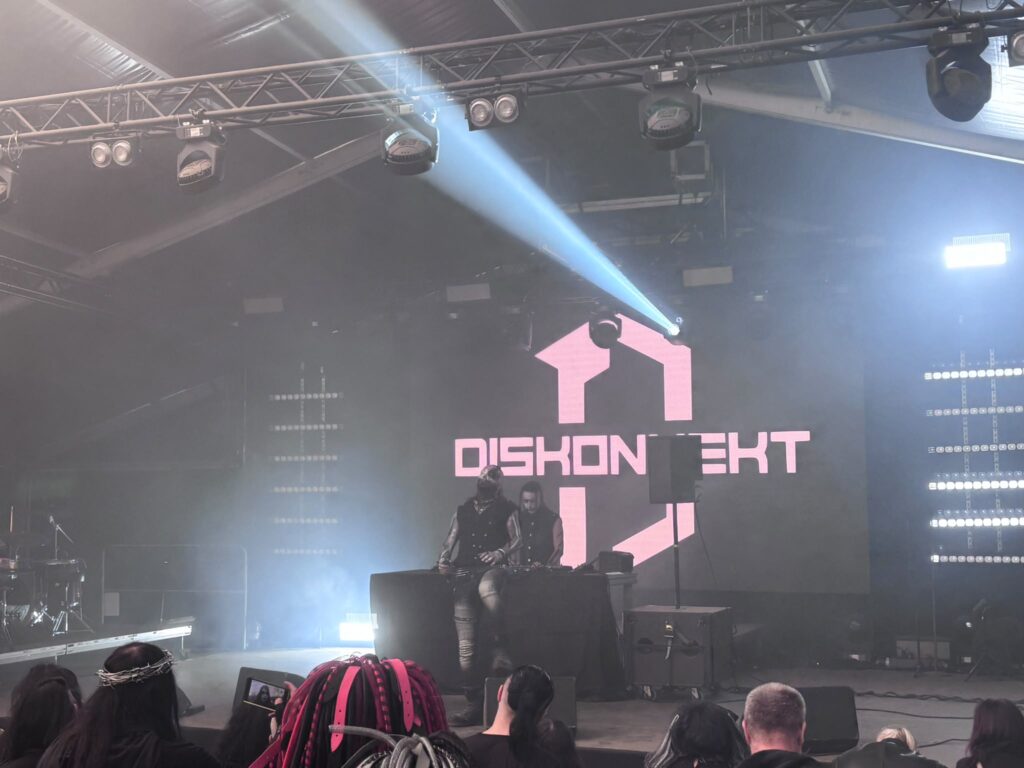
Then we moved to the park stage for Diskonnekt, and that was probably the best dark electro or aggrotech concert of the edition, at least among the ones I saw — well, until Unter Null later that same evening. This is dense, concentrated music built strictly on electronics, but in a shorter concert format it worked extremely well. A very positive, very direct performance.
We briefly went back to the castle, where Ash Code were playing, but here I was disappointed. The trio came with a reduced lineup, and on some songs the guitar was running as a backing track. After the excellent, fully live The Cure concert I had seen two weeks earlier, that kind of Cure-like music in this stripped-down format simply irritated me. We didn’t stay until the end. I heard Cold Cave from outside the castle. It seemed to me that the crowd reacted better than they had to Ash Code, and that the performance itself was also much better — there was simply more being played live — but that’s just my impression.
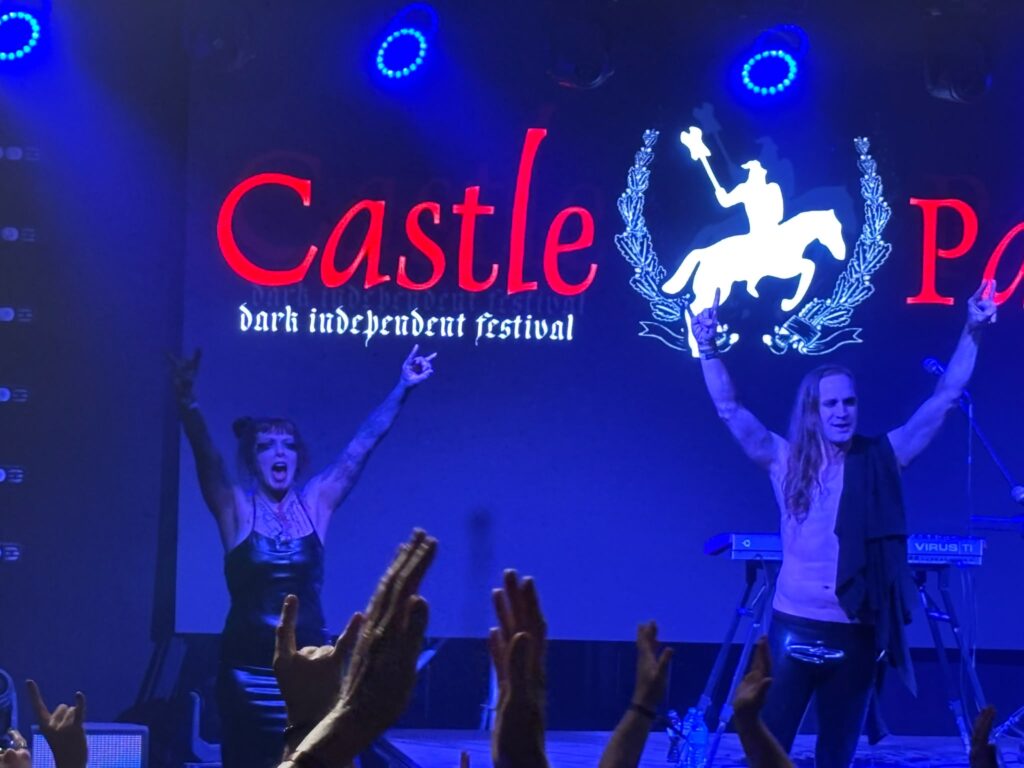
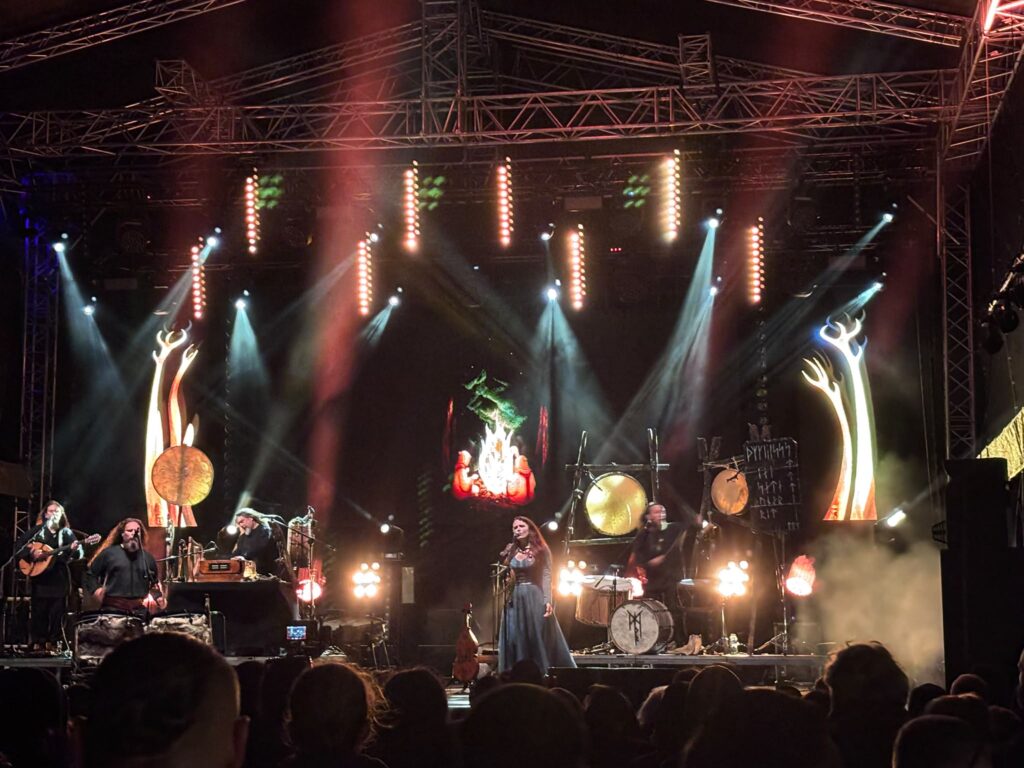
Unter Null was one of the concerts I was most looking forward to, and despite technical problems I wasn’t disappointed. There were issues with the vocal and keyboard sound, and the start was slightly delayed, but Erica Dunham made up for it with a superb vocal performance. I didn’t know she had such a strong voice, one that carried the entire show. You could also tell that she enjoys playing in Poland, although the whole “pierogi” chant thing really could be retired by now. There were flaws, but sentiment and performance quality carried the day. The last concert I saw was SKÁLD. It was a solid, atmospheric folk concert, fully played live, and certainly very satisfying for many people. I approached it skeptically, but it was pleasant to listen to. It didn’t have the kind of energy I remember from Corvus Corax or other strong concerts of that kind, but it was a successful show. On the way back to our accommodation, we could still hear Extize finishing things off. I didn’t watch that performance through to the end, so I won’t judge it in detail, but that whole cabaret-like, ironic, winking-at-the-audience mode just isn’t really my thing.
In closing
We skipped the afterparty again this time, although from the accommodation we could hear the DJs very well. To be honest, I just miss clubs and a proper dance floor instead of grass. Still, the edition itself was successful: there were a few solid concerts, a few very good ones, and several that I’ll really remember. The ones I’ll remember most strongly are Sierra Veins, Covenant, Moonspell, Horskh, Unter Null, Meluzyna, and Diskonnekt. It’s only a shame about a few things I didn’t get to see because of overlapping sets, but that’s classic festival life.